Archive
Complex software makes economic sense
Economic incentives motivate complexity as the common case for software systems.
When building or maintaining existing software, often the quickest/cheapest approach is to focus on the features/functionality being added, ignoring the existing code as much as possible. Yes, the new code may have some impact on the behavior of the existing code, and as new features/functionality are added it becomes harder and harder to predict the impact of the new code on the behavior of the existing code; in particular, is the existing behavior unchanged.
Software is said to have an attribute known as complexity; what is complexity? Many definitions have been proposed, and it’s not unusual for people to use multiple definitions in a discussion. The widely used measures of software complexity all involve counting various attributes of the source code contained within individual functions/methods (e.g., McCabe cyclomatic complexity, and Halstead); they are all highly correlated with lines of code. For the purpose of this post, the technical details of a definition are glossed over.
Complexity is often given as the reason that software is difficult to understand; difficult in the sense that lots of effort is required to figure out what is going on. Other causes of complexity, such as the domain problem being solved, or the design of the system, usually go unmentioned.
The fact that complexity, as a cause of requiring more effort to understand, has economic benefits is rarely mentioned, e.g., the effort needed to actively use a codebase is a barrier to entry which allows those already familiar with the code to charge higher prices or increases the demand for training courses.
One technique for reducing the complexity of a system is to redesign/rework its implementation, from a system/major component perspective; known as refactoring in the software world.
What benefit is expected to be obtained by investing in refactoring? The expected benefit of investing in redesign/rework is that a reduction in the complexity of a system will reduce the subsequent costs incurred, when adding new features/functionality.
What conditions need to be met to make it worthwhile making an investment,  , to reduce the complexity,
  , of a software system?
Let’s assume that complexity increases the cost of adding a feature by some multiple (greater than one). The total cost of adding  features is:

where:  is the system complexity when feature
  is added, and
  is the cost of adding this feature if no complexity is present.
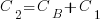 ,
,  , …
, … 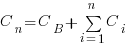
where:  is the base complexity before adding any new features.
Let’s assume that an investment, , is made to reduce the complexity from  (with
(with  ) to
) to 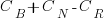 , where
  is the reduction in the complexity achieved. The minimum condition for this investment to be worthwhile is that:
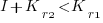 or
or 
where:  is the total cost of adding new features to the source code after the investment, and
  is the total cost of adding the same new features to the source code as it existed immediately prior to the investment.
Resetting the feature count back to  , we have:

and

and the above condition becomes:


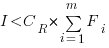
The decision on whether to invest in refactoring boils down to estimating the reduction in complexity likely to be achieved (as measured by effort), and the expected cost of future additions to the system.
Software systems eventually stop being used. If it looks like the software will continue to be used for years to come (software that is actively used will have users who want new features), it may be cost-effective to refactor the code to returning it to a less complex state; rinse and repeat for as long as it appears cost-effective.
Investing in software that is unlikely to be modified again is a waste of money (unless the code is intended to be admired in a book or course notes).
Effort estimation’s inaccurate past and the way forward
Almost since people started building software systems, effort estimation has been a hot topic for researchers.
Effort estimation models are necessarily driven by the available data (the Putnam model is one of few whose theory is based on more than arm waving). General information about source code can often be obtained (e.g., size in lines of code), and before package software and open source, software with roughly the same functionality was being implemented in lots of organizations.
Estimation models based on source code characteristics proliferated, e.g., COCOMO. What these models overlooked was human variability in implementing the same functionality (a standard deviation that is 25% of the actual size is going to introduce a lot of uncertainty into any effort estimate), along with the more obvious assumption that effort was closely tied to source code characteristics.
The advent of high-tech clueless button pushing machine learning created a resurgence of new effort estimation models; actually they are estimation adjustment models, because they require an initial estimate as one of the input variables. Creating a machine learned model requires a list of estimated/actual values, along with any other available information, to build a mapping function.
The sparseness of the data to learn from (at most a few hundred observations of half-a-dozen measured variables, and usually less) has not prevented a stream of puffed-up publications making all kinds of unfounded claims.
Until a few years ago the available public estimation data did not include any information about who made the estimate. Once estimation data contained the information needed to distinguish the different people making estimates, the uncertainty introduced by human variability was revealed (some consistently underestimating, others consistently overestimating, with 25% difference between two estimators being common, and a factor of two difference between some pairs of estimators).
How much accuracy is it realistic to expect with effort estimates?
At the moment we don’t have enough information on the software development process to be able to create a realistic model; without a realistic model of the development process, it’s a waste of time complaining about the availability of information to feed into a model.
I think a project simulation model is the only technique capable of creating a good enough model for use in industry; something like Abdel-Hamid’s tour de force PhD thesis (he also ignores my emails).
We are still in the early stages of finding out the components that need to be fitted together to build a model of software development, e.g., round numbers.
Even if all attempts to build such a model fail, there will be payback from a better understanding of the development process.
Comments on the COVID-19 model source code from Imperial
At the end of March a paper modelling the impact of various scenarios on the spread of COVID-19 infections, by the MRC Centre for Global Infectious Disease Analysis at Imperial College, appears to have influenced the policy of the powers that be. This group recently started publishing their modelling code on GitHub (good for them).
Most of my professional life has been spent analyzing other peoples’ code, for one reason or another (mostly Fortran, then Pascal, and then C). I had heard that the Imperial software was written in C, but the released code is written in R (as of six hours ago, there is the start of a Python version). Ok, I can work with R, but my comments will be general, since I don’t have lots of in depth experience reading R code.
The code comes from a research context, and is evolving, i.e., some amount of messiness is to be expected.
There is not a lot of code to talk about (248 lines setting things up, 111 lines for a Stan model, 371 lines of plotting code, and 85 lines of utility code). The analysis is performed by creating a model using the Stan statistical inference language (in which the high level structure of the problem is specified, compiled to a lower level form and then run; the Stan language is very similar to R). These days, lots of problems are coded using a relatively small number of lines that call fancy libraries to do the heavy lifting. It is becoming rare to have to write tens of thousands of lines of code to solve a problem.
I have two points to make about the code, all designed to reduce the likelihood of mistakes being made by the person working on the source. These points mainly apply to the Stan code, because that is where the important stuff happens, but are equally applicable to all code.
- Numeric literals are embedded in the code, values include:
2.4,1.0,0.5,0.03,1e-5, and1e-9. These values obviously mean something to the person who wrote the code, and they can probably be interpreted by experts in the spread of virus infections. But why are they scattered about the code, rather than appearing together (as a sequence of assignments to variables with meaningful names)? Having all the constants in one place makes it easier to spot when a mistake has been made, e.g., one value has been changed without a corresponding change in another value; it also makes it easier for people new to the code to figure out what is going on, - when commenting out code, make it very obvious, e.g., have
/**********************on its own line, and*****************************/on its own line. Using just/*and*/makes it easy to miss that code has been commented out.
Why have they started a Python implementation? Perhaps somebody on the team is more comfortable working with Python (when deadlines loom, it is always best to go with what you know).
Having both an R and Python version is good, in that coding mistakes are likely to show up as inconsistencies in the results produced. It’s always good to have the output of two independently written programs to compare (apart from the fact it may cost twice as much).
The README mentions performance issues. I imagine that most of the execution time is spent in the Stan code, so R vs. Python is not a performance issue.
Any reader with expertise tuning Stan models for performance might like to check out the code. I’m sure the Imperial folk would be happy to hear about worthwhile speed-ups.
Update
The R source code of the EuroMOMO model, which aims to “… explain number of deaths by a baseline, influenza activity and extreme ambient temperature.”
Predictive Modeling: 15th COW workshop
I was at a very interesting workshop on Predictive Modelling and Search Based Software Engineering on Monday/Tuesday this week, and I am going to say something about the talks that interested me. The talks were recorded, and the videos will appear on the website in a few weeks. The CREST Open Workshop (COW) runs roughly once a month and the group leader, Mark Harman, is always on the lookout for speakers, do let him know if you are in the area.
- Tim Menzies talked about how models built from one data set did well on that dataset but often not nearly as well on another (i.e., local vs global applicability of models). Academics papers usually fail to point out that any results might not be applicable outside the limited domain examined, in fact they often give the impression of being generally applicable.
Me: Industry likes global solutions because it makes life simpler and because local data is often not available. It is a serious problem if, for existing methods, data on one part of a companies’ software development activity is of limited use in predicting something about a different development activity in the same company and completely useless at predicting things at a different company.
- Yuriy Brun talked about something that is so obviously a good idea, it is hard to believe that it had not been done years ago. The idea is to have your development environment be aware of what changes other software developers have made to their local copies of source files you also have checked out from version control. You are warned as soon your local copy conflicts with somebody else’s local copy, i.e., a conflict would occur if you both check in your local copy to the central repository. This warning has the potential to save lots of time by having developers talk to each about resolving the conflict before doing any more work that depends on the conflicting change.
Crystal is a plug-in for Eclipse that implements this functionality, and Visual Studio support is expected in a couple of releases time.
I have previously written about how multi-core processors will change software development tools, and I think this idea falls into that category.
- Martin Shepperd presented a very worrying finding. An analysis of the results published in 18 papers dealing with fault prediction found that the best predictor (over 60%) of agreement between results in different papers was co-authorship. That is, when somebody co-authored a paper with another person, any other papers they published were more likely to agree with other results published by that person than with results published by somebody they had not co-authored a paper with. This suggests that each separate group of authors is doing something different that significantly affects their results; this might be differences in software packages being used, differences in configuration options or tuning parameters, so something else.
It might be expected that agreement between results would depend on the techniques used, but Shepperd et al’s analysis found this kind of dependency to be very small.
An effect is occurring that is not documented in the published papers; this is not how things are supposed to be. There was lots of interest in obtaining the raw data to replicate the analysis.
- Camilo Fitzgerald talked about predicting various kinds of feature request ‘failures’ and presented initial results based on data mined from various open source projects; possible ‘failures’ included a new feature being added and later removed and significant delay (e.g., 1 year) in implementing a requested feature. I have previously written about empirical software engineering only being a few years old and this research is a great example of how whole new areas of research are being opened up by the availability of huge amounts of data on open source projects.
One hint for PhD students: It is no good doing very interesting work if you don’t keep your web page up to date, so people can find out more about it
I talked to people who found other presentations very interesting. They might have failed to catch my eye because my interest or knowledge of the subject is low or I did not understand their presentation (a few gave no background or rationale and almost instantly lost me); sometimes the talks during coffee were much more informative.
Recent Comments